
Memory and Language Fluency
The fluency level of a student is closely linked to their short term memory recall in a language. This is my experiment.

ELT Pros On Linkedin | Video Library | Lesson Library | TpTs

I’ve always been fascinated by the role memory plays in language acquisition. It isn’t a straight forward relationship (better memory = better fluency) however, looking at student “2nd language memory” does allow us teachers in a very crude way, to gather knowledge about student fluency.
I’m posting this because I have a request. I’d like some teachers to try out the following experiment and then report back. The experiment is based on my own observation and thesis that student fluency is directly related to short term memory recall of discrete language items. Read this background article on the premise behind this thesis: Phonological Memory and 1st Language Competence.
Background
When I first began teaching I was given leveled classes and a busy schedule. Many evening classes. Inevitably, the school owner would come to me between class breaks and just before classes, asking me to “test” a student, so we could put them into the correct level of class. I was always rushed and didn’t have a lot of time to spend with them. I had to get back to the class at hand.
So, I had to get a system for quickly discerning their level but which wasn’t so subjective and cursory. What to do?
I started having them do the normal quick placement paper test. In addition, I talked to them for 5 min. Socially and then using a photo, asking progressively more difficult questions. Once they began making mistakes in both form and function/meaning – I’d knew which level they’d be put in. This still took a long time! I just couldn’t do all that, every day and still prepare for classes and have some downtime to recuperate between classes. What to do now?
The Experiment
So this is what I did and it worked. I’d like you to repeat the experiment and give it more validity (or destroy its validity!). It would also make a great MA thesis, if anyone needs one!
Give the student who needs to be leveled a short story, one paragraph long. Here’s a sample. See others to use below.
John is 21 and studies math at university. He lives with 3 other students in a 2 bedroom apartment on the 5 th floor of an apartment building, outside of the city. Every Friday he does the shopping. He buys a lot of pasta and rice. He also likes apples and potato chips. His budget is usually $45 per week. Sometimes, he buys ice cream. He never buys candy. He walks to the grocery store which is about 6 blocks from his home, near a park. If it is raining he takes the 618 bus which takes about 5 minutes.
Let the student read it for only 1 min (or you read it to the student). After the student has read the passage, ask them some recall questions. {What is his name? What day does he go shopping? How much does he spend? What does he never buy? How many students does he live with? etc…}
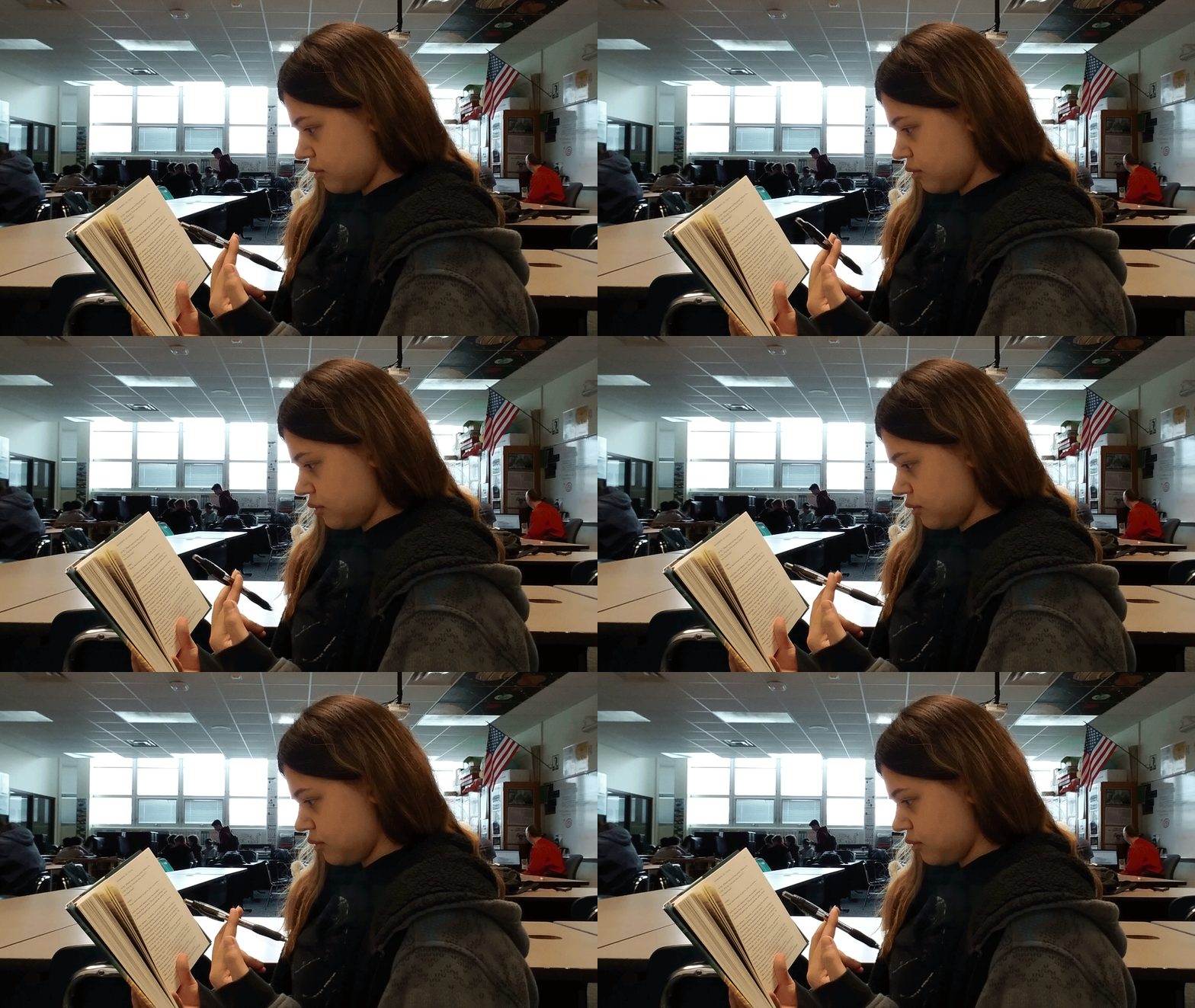
The hypothesis to be tested is: Is the amount of immediate information recalled (remembered) by the student related to their language level? If so, how close is this relationship?
My contention and informal findings are that memory is related to language fluency level. All students understand everything in the passage for the most part – however, only higher level students are able to store the information (because they aren’t focusing on form so much – this is related to Van Patten’s input processing hypothesis (1992), that meaning and form cannot be attended to at the same time by second language students). This test/experiment might be a very objective and quick way to give a placement test. Much more accurate I believe than the present day tests which are very elaborate and thus, due to this complexity, allow students to “trick” the test and cause problems in validity.
What do you think about my experiment and the relationship between working memory and language fluency level?
The “quick” 2 min. test went like this.
Give the student a simple story to read.
Test their comprehension with simple questions that got more difficult
The more correct answers they got — the higher their level.
. If in doubt, show them a picture and ask them to state vocabulary in it. The better their knowledge of difficult (low frequency) words, the higher their level.
It really does work! Crude but fast way to level test students.
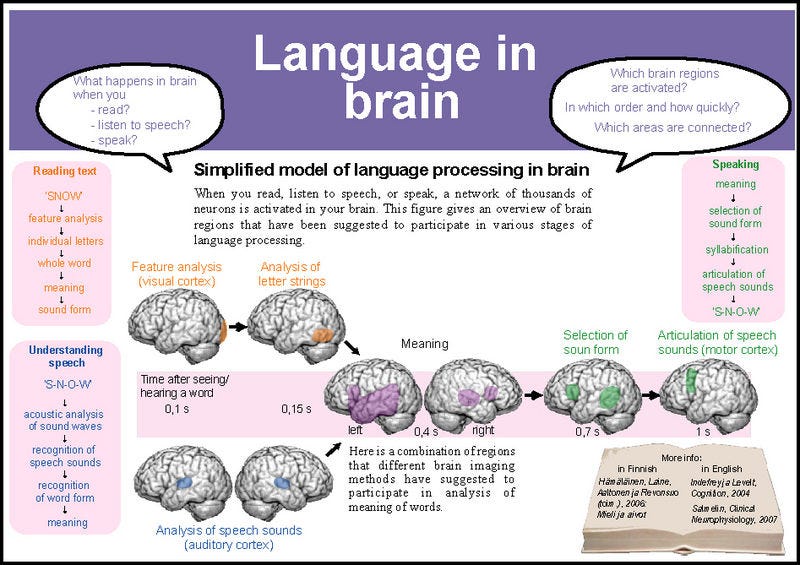
So what was going on here? What actually is the relationship between short-term, working memory and second language fluency?
My theory, proven through much testing and cross-validation is that the higher the ability of students to recall factual information — the higher the students’ 2nd language fluency. As students become more fluent, they become more able in the second language to retain in short-term memory given factual information in the 2nd language (or stronger are the synapses immediately developed to record the 2nd language factual information).
Further, if the students do try to translate, they still will be unable to do so quick enough to enter enough information into 1st language memory. So it is important that you don’t explain the student will be questioned after the reading.
Want to try this out with your own students? Validate it roughly yourself?

HERE you will find some stories and scoring sheets to use.
1 to 4 correct — beginner
5–6 correct intermediate
7+ advanced level.
I’ll also end by mentioning that this relationship between memory and fluency would be an important research topic to take on for those out there looking for a research thesis or topic.

Thanks. I will try this next month when I get back to class. I can try on a variety of levels and ages.
Really nice work! Thanks so much for sharing this.