
A Reader's Development
The 5 Stages of Reading Development. Where are your students at? What does that mean for your own teaching?

[Dear readers. This post, like all the 1,000s I’ve written here - comes from my own experience, mind, sweat and thought. But I thought it would be interesting to carry out an experiment. I generated an AI version (took me 10 minutes). Comment below about your comparative thoughts. Thanks! ]
ELT Linkedin | Videos | Blog | Lesson Library | TpTs | YouTube Channel
Download the free PDF version with a quiz here.
A reader goes through a number of stages of development, a progression. At the beginning, a reader is “learning to read”. Later, the reader is “reading to learn”.
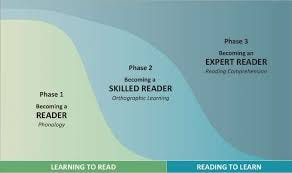
The developmental pattern is similar for both students learning to read an L1 or an L2. Find some handy CEFR reading descriptors highlighting this here.
What’s important at all stages is context, background knowledge and interesting, engaging reading text. Studies have shown that central to reading development is the “voluntary” aspect (Krashen, 2004)- students choosing their own texts.
Here are the 5 different stages a student reader goes through as they go from learning to read to reading to learn.
Stage 1. The Pre – Literate Reader: They can’t read even simple words and may not be able to read in their mother tongue. They show some signs of print awareness and how print works.
Stage 2. The Emergent Reader: This reader is beginning to recognize letters and full words. They have a growing print awareness and phoneme awareness, identifying the letter – sound relationship.
Stage 3. The Early Reader: They begin to be risk takers when reading, predicting and confirming words. They use cues and language patterns for reading. Often pictures are still needed to understand most text. They are beginning to discuss what they read. They have a strong knowledge of high frequency words, the first 300 words of English.
Stage 4. The Transitional Reader: They read at a good pace and use a number of different reading strategies. They possess strong reading comprehension and understand in detail most of what they read. However, they still need help with difficult texts, academic texts.
Stage 5. The Fluent Reader: They read independently. They read long and complex texts without outside help or aids. They understand the importance of text in communication and day to day life.
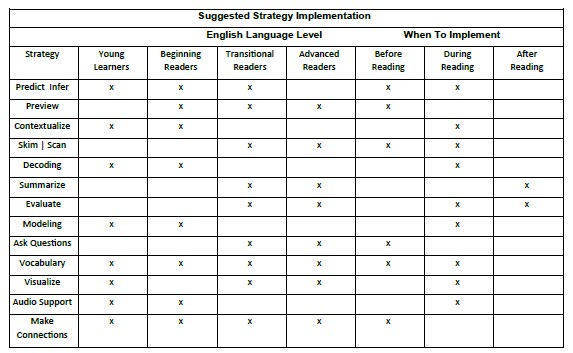
Teachers employ strategies at each stage. Different strategies depending on the learner and where they are in their reading development. Here is a framework for this.
Interested in learning more about the power of reading? Here are a few of our other posts on this topic. Teaching Reading. Reading Strategies.
Also, see this engaging infographic.

