
Research Insights From SLA
Second Language Acquistion insights that might inform our teaching.

It’s often said that teachers need to keep up more with the research and findings on how a second language is learned by students, by individuals. I concurr but at the same time, it is hard to see the forest from the trees. There are so many competing authorities out there and that’s not even considering the plethora of publisher driven “declarations” touting whatever they produce as achieving miracles.
That said, I’m very bullish on the whole read X and then you’ll be a changed teacher thing. It takes a lot more than that for a teacher to transfer what they learn, may believe - into changed classroom practices (and a consenting, trusting administrative stakeholder is needed too).
Ultimately, a teacher needs to reflect upon tentative existing knowledge / findings and blend that with their own experience learning a language plus their beliefs about education and too, the practicalities of the classroom that they confront day in and day out. I often get inspiration about all this through this page of SLA related quotes. One might start their own reflection on teaching practices with my quiz about ELT Teaching Myths.
One article throughout the years I’ve pointed teachers toward is Francis Mangubhai’s end of career summary of what he has found out and declares as “solid” articles of SLA faith. Also, see Claude Goldenberg’s report »>
I have my qualms with some of his Mangubhai’s points but it is a good, honest read. Not full of jargon either.
The author duly notes how contentious the field of SLA is:
Before beginning with these insights, a word of caution is necessary. These insights are what have seemed to me to be compelling and may not be accepted by other researchers as such. (In this respect, readers might like to read Harrison and Gough (1996), a conversation between the two authors on what makes a piece of research compelling for one person but not another.) Others have blazed a trail already and if there is anything new in this article, it is because I stand on the shoulders of these giants (e.g., R. Ellis, 2005; Lightbown, 1985b, 2000).
I’ve summarized the main points here below. Here too is the main article and a nice infographic of his findings in SLA.

INSIGHTS INTO SECOND LANGUAGE ACQUISITION
Francis Mangubhai
Acquisition
Just like children, adults and adolescents can ‘acquire’ a second language. It isn’t just children that have the ability to “pick up” language through exposure.
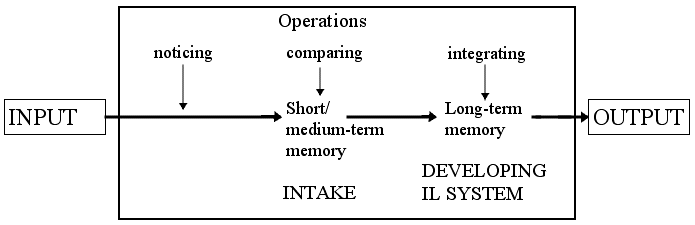
Noticing. Attention.
Learners need to focus on form (not just fluency) in order to develop a more complete grammatical repertoire in the second language.
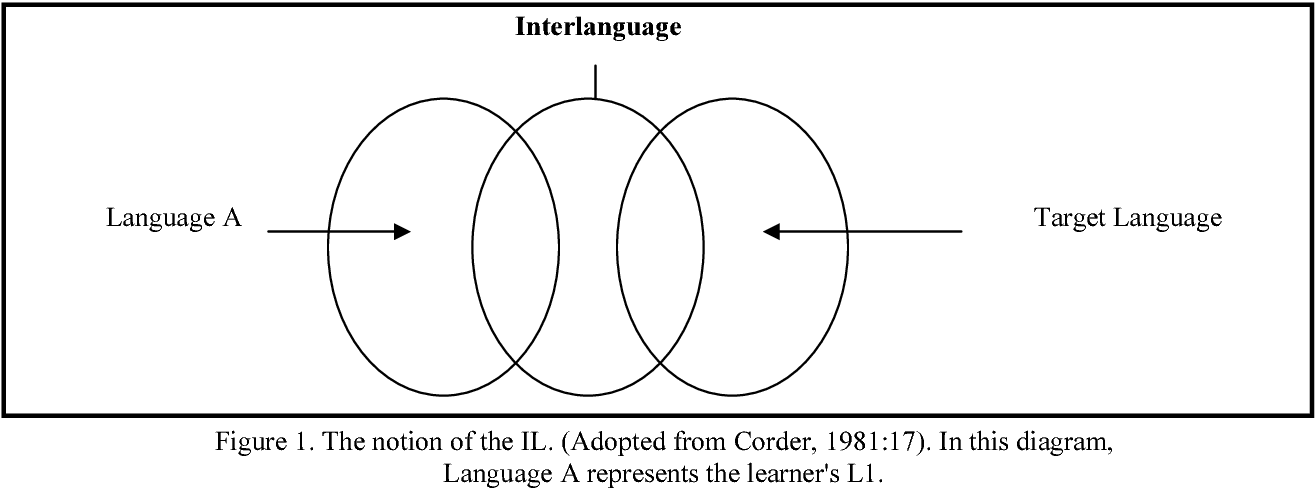
Interlanguage
The learner’s developing grammatical system, the interlanguage, is often characterized by the same systematic errors as learners make when learning their L1 (first language).
Order of Acquisition
There are predictable sequences in SL acquisition; learners have to acquire certain structures first before they can acquire others.
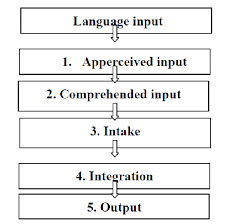
Input. Uptake.
To become fluent in a language, one must practice using it. To become fluent in a language, one must receive extensive L2 input.
Declarative vs Procedural Knowledge
Knowing a language rule does not mean that one will be able to use it in communicative interaction or in writing.
Error Correction
Isolated explicit error correction is usually ineffective in SL learning. It may satisfy and help the teacher-student relationship but it won’t produce a change in language behavior.
Context. Schema.
In meaningful contexts learners are able to comprehend much more than judged by their ability to produce language of comparable complexity.
Personalization
The different rate of learning observed in our students arises out of individual differences. Learning is messy and an individual and often erratic, incidental process.
Direct Instruction
The pour into a vessel view of knowledge (explicit teaching) does not work. It can highlight and add to the learning process but it alone won’t promote acquisition of language and eventual communicative competence and fluency.
Beliefs. Philosophies of Education.
Teachers’ practical theories guide their behavior in classrooms NOT their explicit beliefs. We might believe something in our hearts/head but still not follow it in our classroom practices.
